

 PRE MATCH ANALYSIS
 Follow Us
Before we proceed any further, two things need to be acknowledged. One, Scotland are no pushovers. And two, India, no matter who the opponent is, will not have many days like Wednesday.
The Afghanistan encounter was a clash in which everything fell into place for the Men in Blue, but it would be silly to automatically assume that they would be able to replicate such performance at will, that too at a venue like Dubai.
But as disrespectful and shallow as it may sound, it is hard to ignore the fact that the biggest plot heading into Friday’s clash is whether India will be able to further boost their Net Run Rate to the extent that they will be right in the mix for a semi-final spot.
Indeed, by building up the encounter this way, one assumes that India beating Scotland is a given. But as we all know, cricket, especially T20, does not work that way.
It is a format where, regardless of the disparity in quality, any team can beat any other team on a given day; matches are not won on paper. Ask New Zealand, they will tell you. They won a tough match on paper (versus India) without breaking a sweat but were handed a major scare (versus Scotland) in a clash which they ought to have won easily.
However, all things considered, team India will still fancy their chances of winning big come Friday, for they know they have the potential to do so.
Kohli’s side will come all guns blazing. Whether it ends up being an upset, a close contest or a hammering will completely depend on which Scotland turns up at the Dubai international stadium.
Indian batters vs left-arm spinners and leg-spinners in Dubai: Round 3
India vs Shadab Khan and Imad Wasim
India vs Ish Sodhi and Mitchell Santner
In case you’re not aware of what happened in the two aforementioned contests, here’s a three-word summary: India were humiliated. Two fours were all the Indian batters were able to hit in 84 balls, and they batted at a dumb-founding strike rate of 78.6.
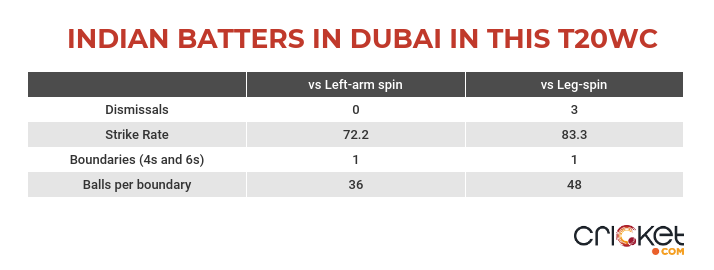
On Friday, it will be time for Round 3: this time, it will be India vs Mark Watt and Chris Greaves. And without a shadow of doubt, the biggest thorn in India’s path will be Watt, who, by some distance, has been the best defensive spinner in this World Cup.
In this Super 12 stage, Watt has maintained an astonishing ER of 4.8, the only spinner to concede under 5 an over. What makes this record outrageous is that Watt has also operated at the death for Scotland, boasting an ER of 6.7 in between 16-20 overs.
What India will need to be wary of is over-exposing the right-handers against Watt. Because the 25-year-old loves coming up against right-hand batters, regardless of how attacking or defensive they are.
So far in this Super 12 stage, Watt has bowled 55 balls against right-handers and conceded just 35 runs. In other words, his ER against the right-handers has been a mere 3.8.
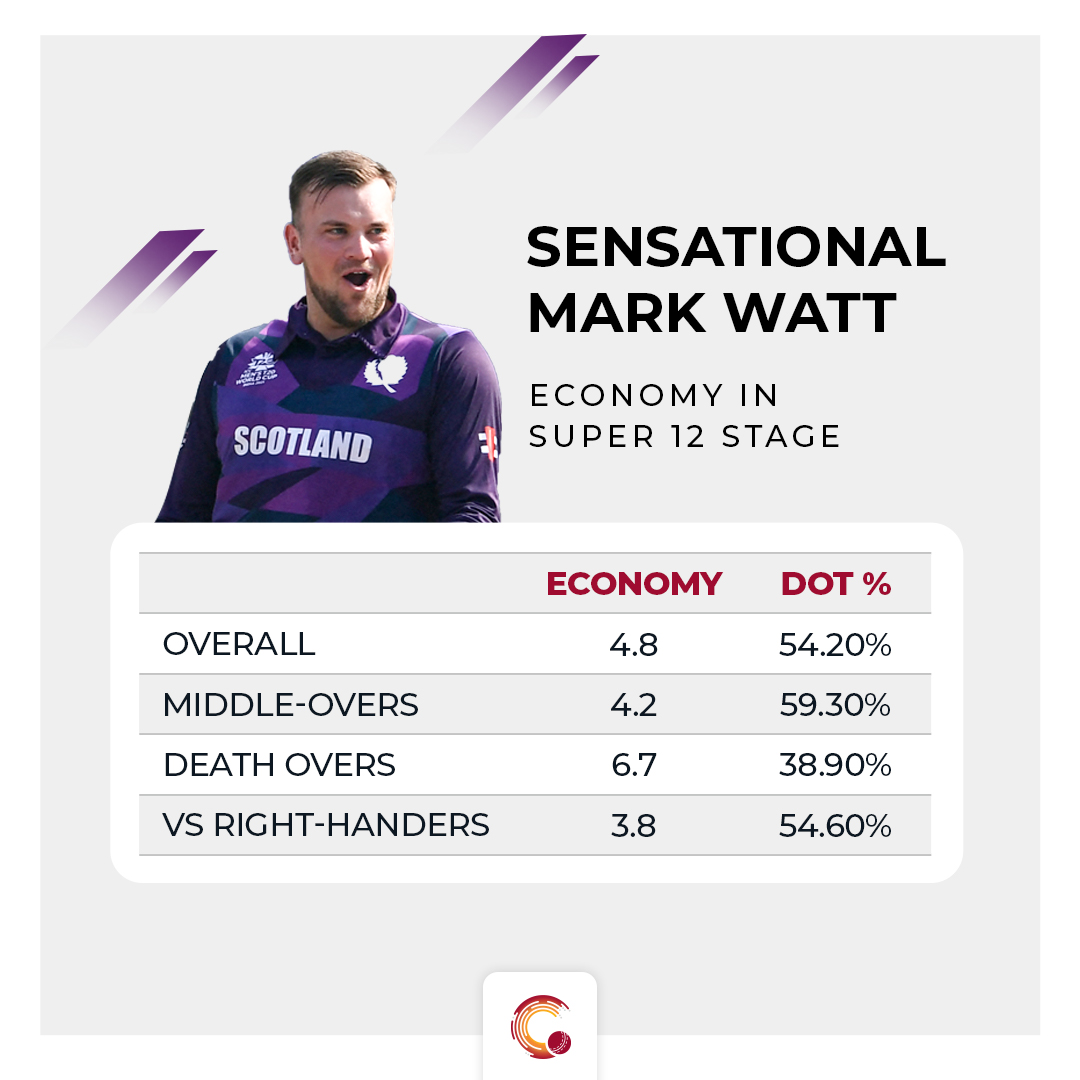
What’s interesting, though, is that Watt has not enjoyed the same control against the left-handers. In contrast, the Scottish spinner has conceded at over 8 runs per over against the lefties, albeit he’s only bowled 17 balls to them. This pattern remained the same in Round 1 too, where he conceded at 4.9 against right-handers as compared to 6.6 against the lefties.
Friday, therefore, might have to be one of those days where India might need to consider using someone like a Rishabh Pant at No.3, even if they do not get off to the greatest of starts.
Watt’s partner, leggie Greaves, is not in the same league when it comes to controlling and consistency, but he too is perfectly capable of inflicting damage. Unlike Watt, Greaves almost exclusively operates in the middle overs, and he tries to take advantage of the pressure exerted by Watt by luring the batters to go for glory hits.
Dubai has thus far been the most economical venue for spinners in this Super 12 stage, so come Friday, the Indian batters will have their work cut out against these two slower bowlers. These 8 overs could very well decide the fate of the match.
Scotland’s need for a ‘team effort with the bat
The batting numbers for Scotland in this Super 12 stage look terrible. They’ve averaged 14 runs per dismissal and they’ve lost a wicket once every 13 balls. They’ve also been twice restricted under 110, with one of the two instances seeing them get bowled out for 60.
But if we are to look at the bright side of things, the team does boast plenty of batters who are capable of making an impact on their day. Starting from Round 1, Scotland have had as many as five batters post 40+ scores. The problem, however, has been that on most occasions, it has only been one batter stepping up and playing a gem, with the others going AWOL.
This was the case again in the New Zealand clash on Wednesday. Michael Leask, batting at No.6, scored an exceptional 20-ball 42. However, no other player stepped up, with Matthew Cross being the only other batter to score more than 25. Should Leask have received any support, Scotland could very well have even beaten New Zealand.
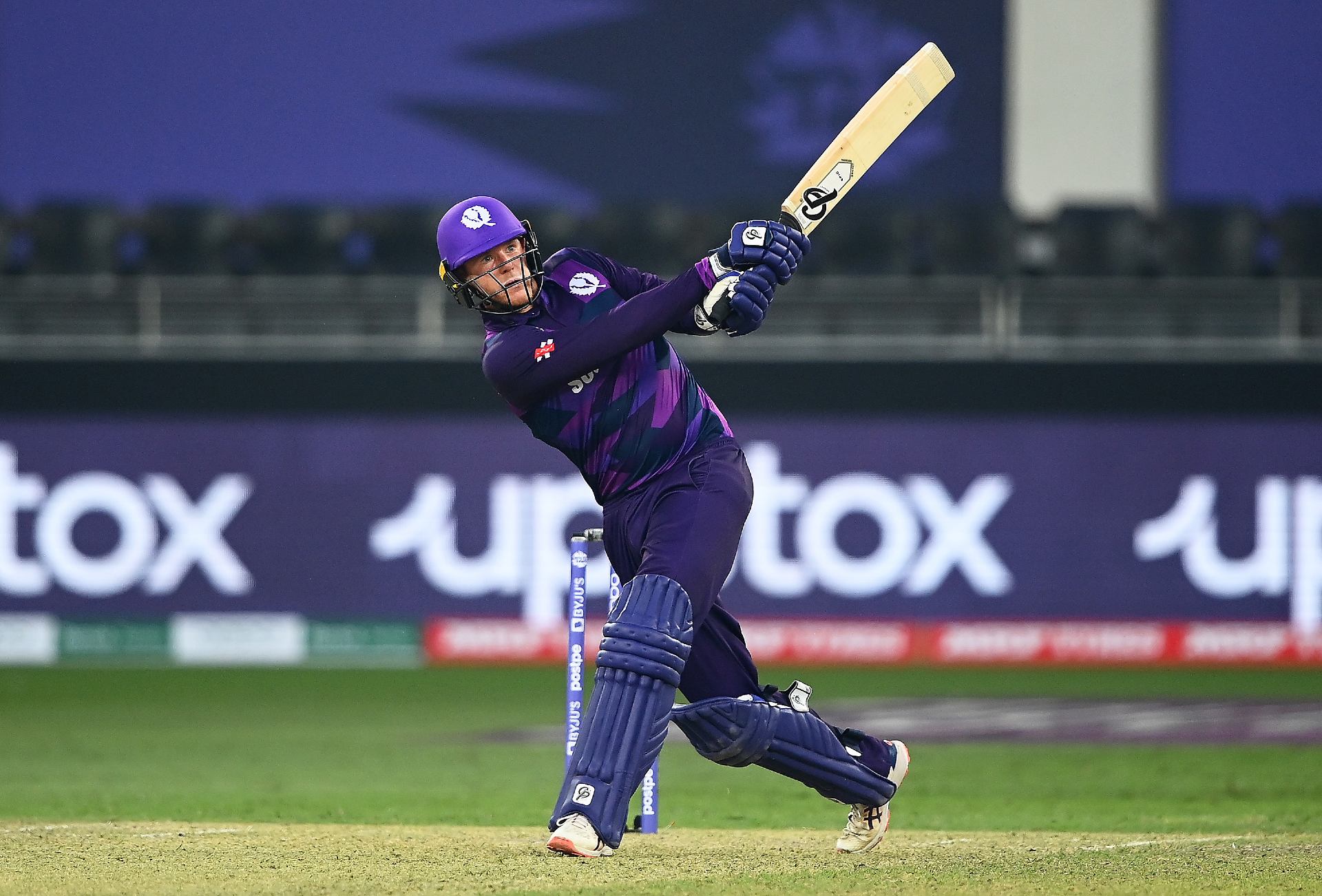
On Friday, against India, that will be Scotland’s challenge. Can more than two batters have a ‘good day’ in the same game? If yes, we could be in for an extremely competitive contest.
India’s second and third seamers still under the scanner
The no-show with the bat meant that India’s bowling, despite not being impressive, was given a pass in each of the first two games. And it received plenty of plaudits post the Afghanistan clash, and rightly so, after restricting the Nabi-led side to under 150 on a belter of a wicket.
But one area still remains a concern, and it is the role of the second and third seamers. India registered a handsome 66-run win on Wednesday, but, between them, Shardul and Shami conceded 63 runs off the 7 overs they bowled, with Bumrah and the spinners once again doing the heavy-lifting.
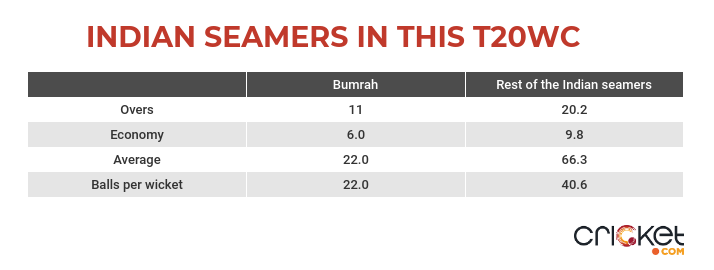
Shami’s was a much-improved performance, with him picking three wickets, but he did bowl quite a few ‘hit-me’ deliveries upfront which were not quite put away by Zazai. And the 21-run Gurbaz onslaught in the fifth over was a timely reminder that Shami was still far from being a reliable entity with the ball.
What India will really be concerned about, however, is the form of Shardul. The right-armer has bowled 4.3 overs so far in this World Cup, and has conceded 47 runs without taking a wicket. He replaced Bhuvneshwar Kumar owing to his wicket-taking ability, but one more bad performance could very well make India ponder bringing Bhuvneshwar back for the Namibia encounter.
Probable XIs
India: KL Rahul, Rohit Sharma, Virat Kohli (c), Suryakumar Yadav, Rishabh Pant (wk), Hardik Pandya, Ravindra Jadeja, Ravichandran Ashwin, Shardul Thakur, Mohammed Shami, Jasprit Bumrah
Scotland: George Munsey, Kyle Coetzer (c), Matthew Cross (wk), Richie Berrington, Calum MacLeod, Michael Leask, Chris Greaves, Mark Watt, Safyaan Sharif, Alasdair Evans, Bradley Wheal