

 PRE MATCH ANALYSIS
 Follow Us
Past events don’t matter in ICC tournaments. In the knockouts, their relevance diminishes further. Yet, it would be hard not to think of the last time the two teams met in an ICC tournament - the 2019 ODI World Cup final where England, after 102 overs of cricket, won the silverware on boundary count.
England are now aiming at the T20 trophy to complete their white-ball domination. It could have happened in 2016, when they lost a close final. The Eoin Morgan-led side has done the hard yards again, this time topping the Group of Death, and thumping top sides like West Indies and Australia. They have excelled in both departments. Moreover, they have been the quintessential T20 side for a number of years leading into this World Cup.
The Kiwis are a bit different. They have never had the best of resources and this becomes accentuated in the T20 format. They are not the ideal T20 unit. But no one executes their plans better than them. The discipline has brought them to another ICC event knockout. Once again, they have a pre-season favorite to surpass.
England’s depth and dilemma
The depth in England’s resources speaks for their suitability to the format. Losing players of the calibre of Ben Stokes and Jofra Archer, there are not many teams who would be able to absorb the loss of their star all-rounder and star bowler before a World event. England have further lost Tymal Mills and Jason Roy in the middle of the tournament. However, they have a like-for-like replacement ready in James Vince, or Jonny Bairstow set to open with Sam Billings slotting at seven. They also have the option of adding another pace bowling all-rounder in David Willey and Tom Curran.
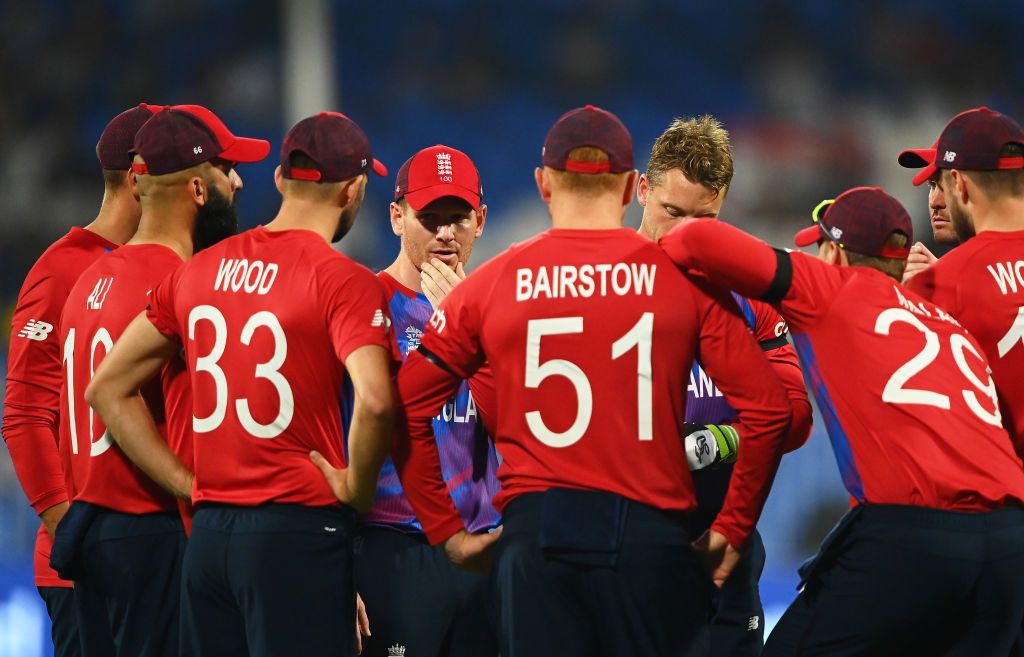
This is the big decision that stands in front of the England management ahead of this semi-final with both cases presenting their pros and cons. The latter will elongate the string of bowling all-rounders in the side with Chris Woakes batting a spot higher than he should - at number seven. But on the surface in Abu Dhabi, which has been the least conducive for spin bowling, an extra seamer might come in handy. Vince or Billings’ inclusion will keep England’s resources down to three pacers and three spinners.
Two of these spinners - Moeen Ali and Liam Livinsgtone - are part-timers. New Zealand have only one left-hander in their top five and Moeen has bowled only two of his 84 deliveries in the competition with two right-handers at the crease.
A good way to deal with the conundrum is to play Willey and push him to open. It will dilute one bowling all-rounder among the specialists and Woakes will bat at eight while providing four seam bowling options to England. Although, it sounds too quirky a move to try in a semi-final.
Does New Zealand’s method bode well to take on England?
It has been a World Cup dominated by bowlers. The average first innings score across all the four venues ranges from 123 to 150. New Zealand’s style, or rather team combination, has blended well to the conditions. Their well-rounded bowling arsenal has covered the flaws in their batting unit which has done just enough to float their boat.
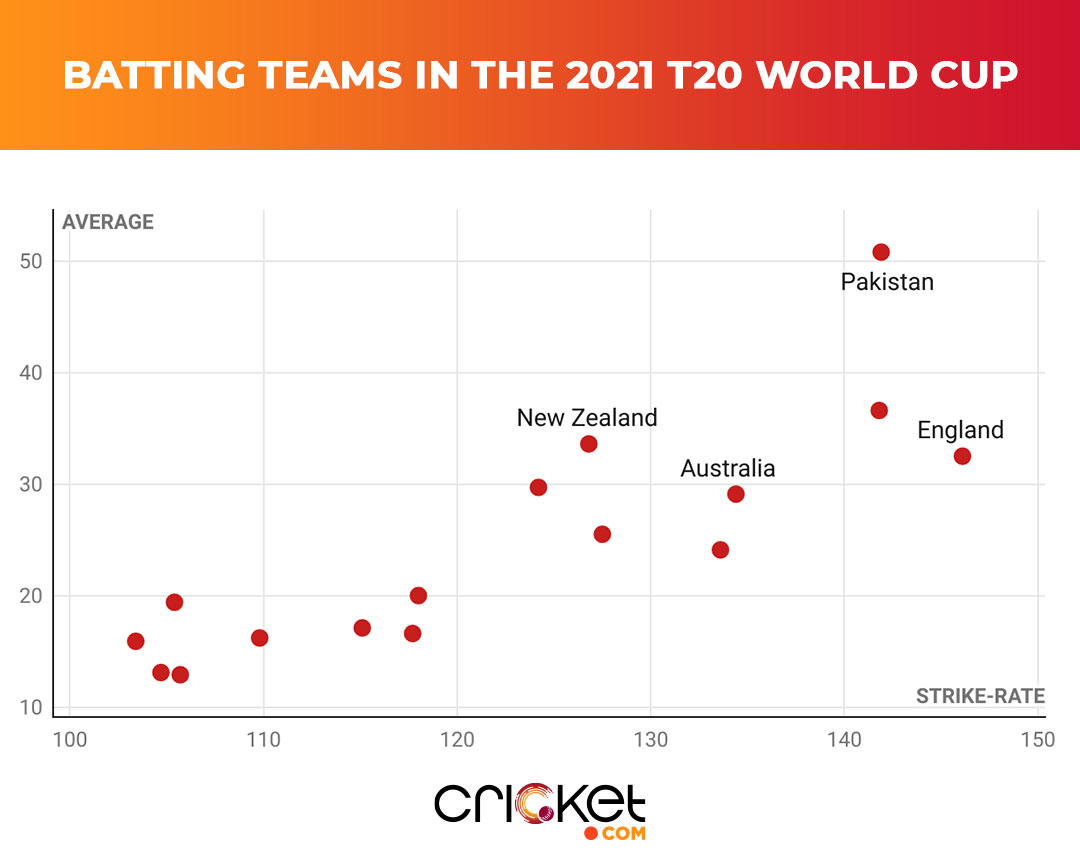
They have been the least convincing batting unit among the four semi-finalists. It is not surprising given their strange setup. Two top-order batters in Devon Conway and Glenn Phillips are stacked in the middle-order. James Neesham is far from the most convincing finisher in this tournament. The fact that Mitchell Santner, a bowling all-rounder, is positioned at seven increases the onus on Neesham.
It was a bit of a surprise when they benched Tim Seifert, although another top-order batter positioned in the middle-order, to accommodate Adam Milne. New Zealand, thus, became a forceful bowling side with three specialist pacers, two convincing spinners and an additional seam option in Neesham. But at the expense of going a batsman short in an awry batting arrangement.
The question arises: Can they continue with a batter less against a side like England? Knowing the Kiwis, they might proceed with the same balance that has elevated them to the Top 4.
The Contest
New Zealand’s trade for an extra bowler has provided them rich dividends. They are the best bowling side in the tournament, especially in terms of economy. They have the best balls-per-boundary ratio, conceding not more than one boundary every 8.6 deliveries. England, as seen in the above graphic, have been the best batting side, particularly on the strike-rate front. Hence, this presents a spicy contest between bat and ball. England bat deep and the Kiwis have six bowling options.

For New Zealand, the opportunity lies with the new ball. Among the three venues in UAE, Abu Dhabi has the best powerplay bowling average - 19.3. Trent Boult, Tim Southee and Adam Milne will be tasked to see the back of Jos Buttler as soon as possible. Besides averaging 70 at a strike-rate of 144 in T20Is this year, Buttler is also the second-highest run-scorer this World Cup, with 240 runs and the only hundred of this tournament. Digging deep in England’s line-up without seeing through Buttler is virtually impossible.
There also lies a contest in the vice-versa. New Zealand averages a prominent 37.7 with the bat in powerplay. To counter it, England have the best powerplay bowling average - only 11.4 runs per wicket.
Probable XIs
England: Jos Buttler (wk), Jonny Bairstow, Dawid Malan, Moeen Ali, Eoin Morgan (c), Liam Livinsgtone, Chris Woakes, David Willey, Chris Jordan, Mark Wood, Adil Rashid
New Zealand: Martin Guptill, Daryl Mitchell, Kane Williamson (c), Devon Conway (wk), Glenn Phillips, James Neesham, Mitchell Santner, Tim Southee, Adam Milne, Ish Sodhi, Trent Boult